

What makes us human isn’t just what we feel, but what we feel alongside others. Connection. I don’t care if a car can drive itself, or a robot can fly into space. What does bring tears to my eyes, though, is watching four orange-clad astronauts–one woman and one black man included–climbing out of the Integrity capsule in the middle of the Pacific Ocean last month. There’s a quiet understanding among us humans that we can make mistakes, and in this spectacular moment we didn’t. Many of us watched the daily 4-second delay videos from the Artemesis II crew in space and shared that familiar human feeling of hope.
When reflecting on connection for this year’s McMillan theme on humanness, a quote from author Brené Brown comes to mind: “I define connection as the energy that exists between people when they feel seen, heard, and valued; when they can give and receive without judgment; and when they derive sustenance and strength from the relationship.”
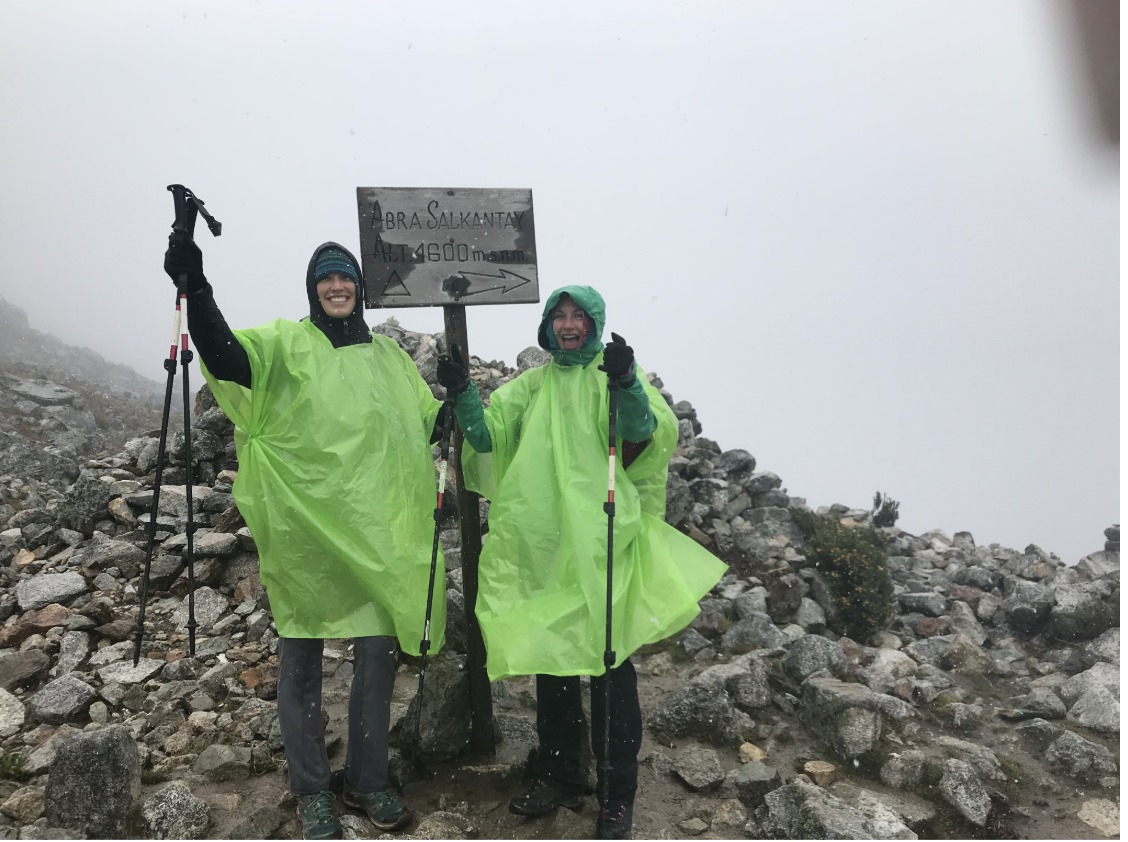
To that end, I think about the big and small moments in life that are not nearly as monumental without my people by my side. For me, this connection shows up when my childhood best friend and I make eye contact at a rehearsal dinner when the song from our 7th grade talent show performance blasts through the speakers. We bust out our terrible dance routine, sharing laughter like no time has passed. Other times, it looks like standing at the top of a 15,000-foot rainy mountain that I climbed with my best friend who just graduated from med school—we celebrated in Peru. Don’t worry, the guides brought us trash bags to keep us warm.
Recently, on a work trip, I had a chatty airplane seatmate. I was pleasantly shocked to be speaking with a stranger–how refreshing it was to meet someone new, discuss topics I wouldn’t normally cover like orthopedic surgery and the army and feel different parts of my brain lighting up. With the advent of the iPhone, it seems like gone are the days of spontaneous conversation. Obviously, when contemplating our humanness, we must consider the role of technology in our lives—first social media and its implications on society, now the rapid rise of artificial intelligence.
In a recent NYT opinion piece, Cal Newport, author of Deep Work, describes the dichotomy between our excitement for technological advances and our collective hesitation at the demise of humanity—or at least the workforce. Technology has impacted our social lives for good (one study suggests 27% of newlyweds in 2025 met via dating apps) and bad (increased anxiety, depression, and sleep disturbances). And, technology is perhaps coming for our jobs and probably contributing to our cognitive decline (decreased attention, problem solving, etc). Like the 90’s resistance to smoking or the rising emphasis on diet and exercise, ethical AI use feels like our next societal reckoning. All this to say, many of us see the harm in pouring more resources into technology—and the pros/cons debate rages on. I’m not sure of the answer for AI, but one question haunts me: Why are we moving further from human connection? In my eyes, connection—the energy that exists between us—is the essence of life.
Circling back to our work with young people, our company ethos isn’t centered on the most prestigious title. We pride ourselves in helping students find the right fit for their development. Especially now, with technology reshaping the job market at breakneck speed, it’s time to dig into our humanness. More and more, I see college as a stepping stone in personal development, not just a means to a career. One of the main benefits liberal arts education encourages development in critical thinking, writing and communication, and adaptability, all skills needed to be an empathetic and considerate citizen. I realize this notion of college as a piece of personal development is a privilege few can access, unfortunately. Outside of increasing opportunities for higher education, how do we support young people to become ethical, conscientious beings? How do we show up for our communities and each other?
Maybe the thread running through all of these questions is simple: To be human is to be invested in one another. To feel relief for strangers, celebrate milestones that aren’t ours, hold onto shared memories that only make sense to a few. To be human is laughing together, holding our breath together, showing up for one another. Hoping for goodness together.