

The label “Little Ivies” circulates widely in college planning conversations, and in doing so, it reinforces a prestige-based framework that organizes institutional evaluation around brand proximity rather than academic structure, curricular depth, or outcomes. That framework is a weak foundation for serious college planning. It accounts for a narrow slice of the undergraduate landscape, leaves the majority of strong non-Ivy League schools unexamined, and a well-constructed college list should extend well beyond it.
The interest in this category is nonetheless real, and this article examines it on those terms: what the Little Ivies are, how the category is defined, and what families engaged in college planning need to understand about these institutions academically and financially.
The Little Ivies at a Glance
- The Little Three: Amherst, Williams, and Wesleyan, are the founding core of the category, named after the athletic rivalry formalized in 1899.
- The Maine Big Three: Bates, Bowdoin, and Colby, form their own consortium and share a close geographic and institutional identity.
- The remaining NESCAC Little Ivies: Connecticut College, Hamilton, Middlebury, Trinity, and Tufts.
- Some sources add seven more: Bucknell, Colgate, Haverford, Lafayette, Swarthmore, Union, and Vassar.
What Are the Little Ivies?
“Little Ivies” is an informal label for a group of small, selective colleges in the northeastern United States whose academic standards and admissions selectivity drew historical comparisons to the Ivy League, and from which the name derives. The term carries no official standing: no accrediting body, athletic conference, or institutional consortium uses it as a formal category.
It appears in college planning conversations primarily as shorthand for a set of schools perceived to share the academic intensity and selectivity associated with the Ivy League, and that perceived proximity to a prestige brand is precisely where the framework becomes a weak basis for planning. Selectivity is one variable. It is not a proxy for institutional quality, academic structure, or outcomes, and understanding what type of college is right for a given student requires examining all of those variables together.
Which Colleges Are Considered the Little Ivies?
Because the category has no official membership, different sources group these schools differently. Some cite 8, others as many as 18. Across most of those lists, however, the 11 member institutions of the New England Small College Athletic Conference (NESCAC) appear consistently. NESCAC is a formal athletic conference with stable, long-standing membership, and that consistency makes it the most practical organizing framework available.
Some sources also include schools such as Swarthmore, Haverford, Vassar, Colgate, Lafayette, and others under the Little Ivies label, and while that usage is widely recognized, the 11 colleges discussed below are also members of NESCAC.
1. The Little Three
The Little Three refers to Amherst, Williams, and Wesleyan, the three colleges whose athletic rivalry, formalized in 1899, gave the Little Ivies category its name and its earliest institutional core. The term mirrors the Ivy League’s own “Big Three” of Harvard, Princeton, and Yale, and these three colleges remain the most consistently cited Little Ivies across every source that uses the designation.
1.1 Amherst College | Enrollment: ~1,900 | Acceptance rate: 7%

Amherst operates an open curriculum with no core requirements and no distribution mandates, placing the full weight of academic planning on the student from the first semester. Students select from 43 majors across the arts, humanities, natural sciences, and social sciences, with access to more than 6,000 additional courses through the Five College Consortium. The college meets 100% of demonstrated financial need for all admitted students and has eliminated loans from its financial aid packages entirely. 80% of alumni report attending graduate or professional school.
1.2 Williams College | Enrollment: ~2,100 | Acceptance rate: 7.4%
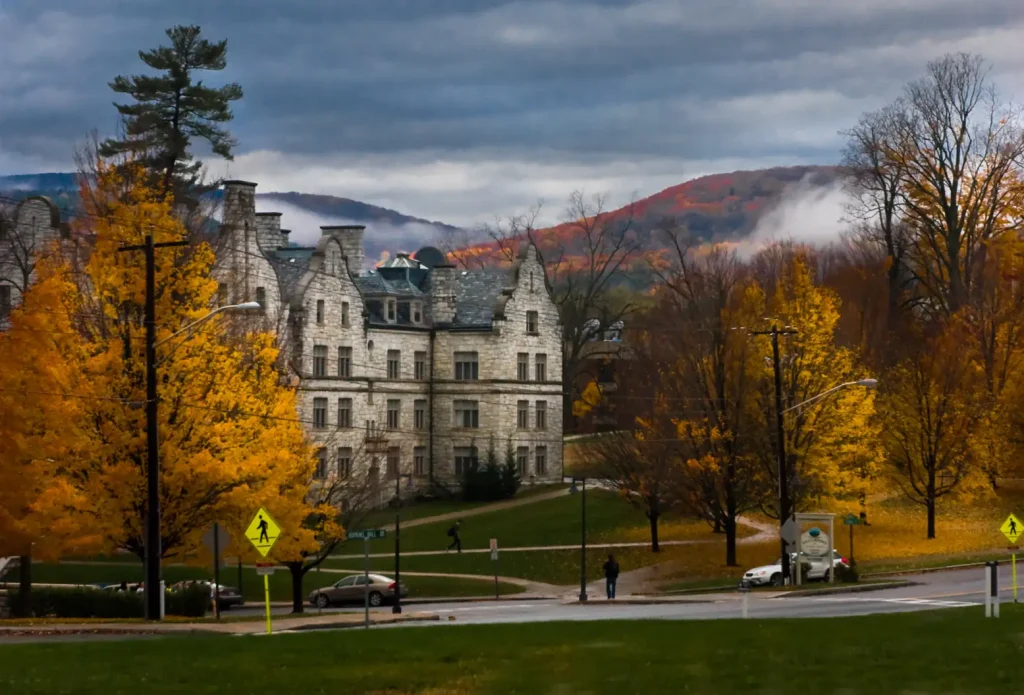
Williams, one of the original Little Ivies and a founding member of the Little Three, structures undergraduate study across three academic divisions (languages and the arts, social sciences, and science and mathematics) with a mandatory Winter Study term each January, during which students complete a single intensive course, independent project, internship, or international program. The college offers 37 majors through 26 departments and maintains affiliations with the Clark Art Institute and MASS MoCA, creating direct access to curatorial and studio resources at the undergraduate level. Williams meets 100% of demonstrated financial need, with no loans or required work contributions in any student’s aid package.
1.3 Wesleyan University | Enrollment: ~3,200 | Acceptance rate: 16%
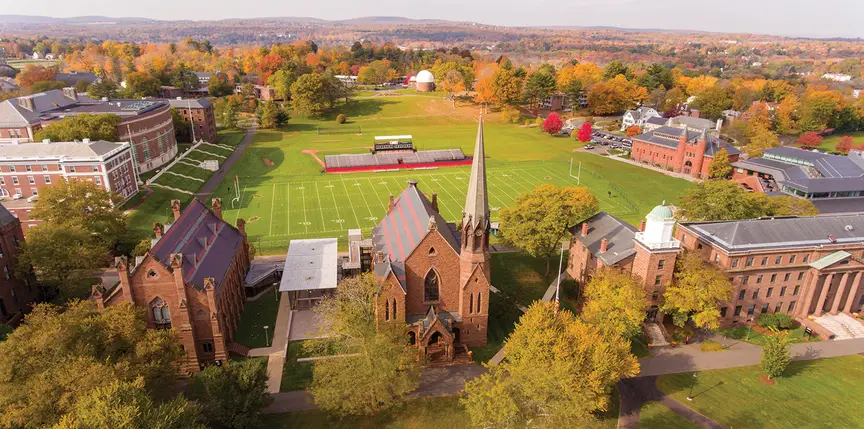
Wesleyan is the largest institution in NESCAC and one of the few liberal arts schools to maintain both a PhD-granting graduate program and a significant undergraduate research infrastructure. The curriculum does not impose a core but uses General Education Expectations across three areas of inquiry (humanities and the arts, social and behavioral sciences, and natural sciences and mathematics), leaving students broad latitude in how they satisfy each. Wesleyan has been test-optional since 2014, well before the practice became widespread.
2. The Maine Big Three
The Maine Big Three refers to Bates, Bowdoin, and Colby, three liberal arts colleges in Maine that form their own consortium, the Colby-Bates-Bowdoin Consortium (CBB), and share a close geographic and institutional identity.
2.1 Bates College | Enrollment: ~1,760 | Acceptance rate: ~13%
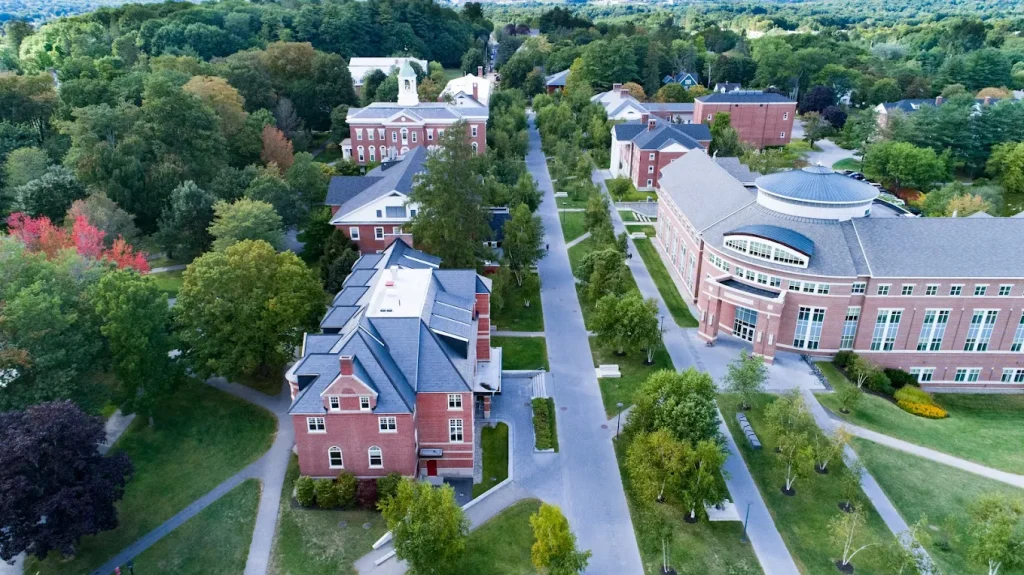
Bates requires every undergraduate to complete a senior thesis, a requirement that structures the final year around sustained independent research regardless of major. The college was among the first selective liberal arts institutions to adopt test-optional admissions, doing so in 1984. Bates uses a 4-4-1 academic calendar, with two four-course semesters followed by a Short Term in spring that permits concentrated study in a single subject, fieldwork, or independent projects. The college was coeducational and open to students of all races from its founding in 1855. Average federal student loan debt for recent graduates was $13,279, roughly half the national average.
2.2 Bowdoin College | Enrollment: ~1,900 | Acceptance rate: 6.8%
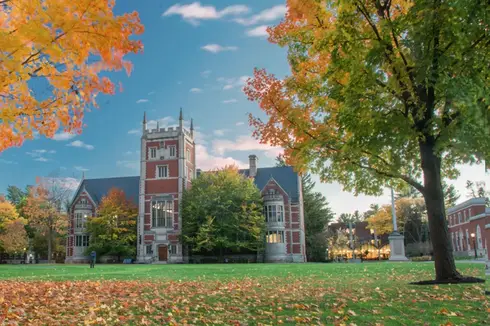
Bowdoin requires students to complete coursework in five distribution areas (mathematical, computational, or statistical reasoning; inquiry in the natural sciences; international perspectives; visual and performing arts; and exploring social differences) but imposes no fixed core sequence, allowing broad flexibility in how these requirements are fulfilled. The college became the first test-optional institution in the country in 1969. Bowdoin meets 100% of demonstrated financial need and has eliminated loans from all undergraduate aid packages. 52% of the Class of 2029 received need-based financial aid, with an average award of $72,000.
2.3 Colby College | Enrollment: ~2,300 | Acceptance rate: 7% (Class of 2029)
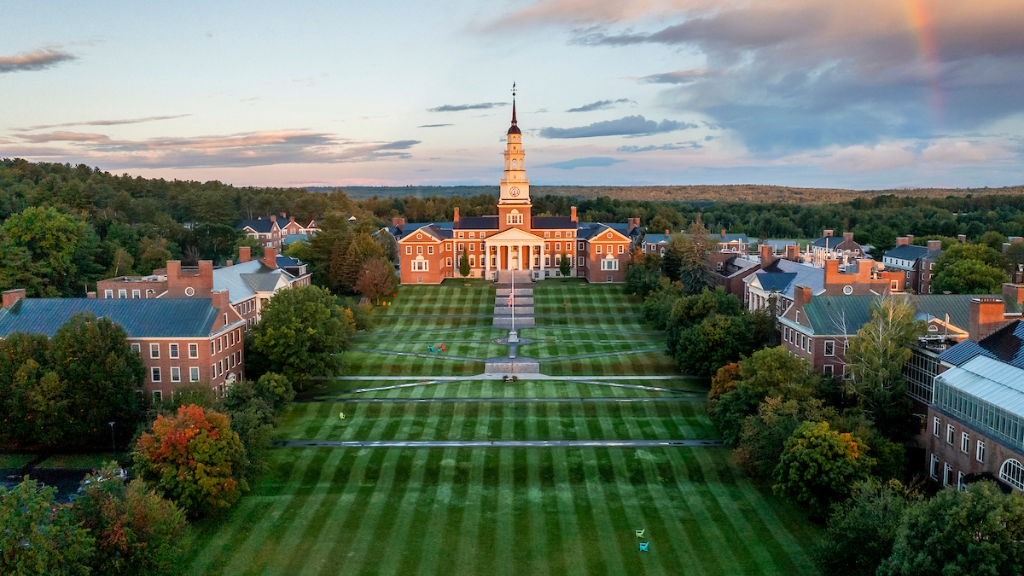
Colby is considered a Little Ivy college that, alongside Bates and Bowdoin, forms the Maine Big Three grouping within NESCAC. It requires students to satisfy distribution requirements across seven areas (arts, historical studies, literature, quantitative reasoning, natural sciences, social sciences, and diversity) and to demonstrate proficiency in a second language. The college has been test-optional since 2018. Colby has invested heavily in applied research infrastructure at the undergraduate level: the Davis Institute for Artificial Intelligence, established as the first cross-disciplinary AI institute at a liberal arts college, integrates machine learning research across multiple departments.
3. The Other NESCAC Little Ivies
The remaining five NESCAC institutions: Connecticut College, Hamilton, Middlebury, Trinity, and Tufts, joined the conference that the founding schools established and share the same core profile: small enrollment, undergraduate focus, and academically demanding programs. Tufts is the notable exception within this group of Little Ivies, operating as a full research university rather than a liberal arts college.
3.1 Connecticut College | Enrollment: ~1,800 | Acceptance rate: 37%
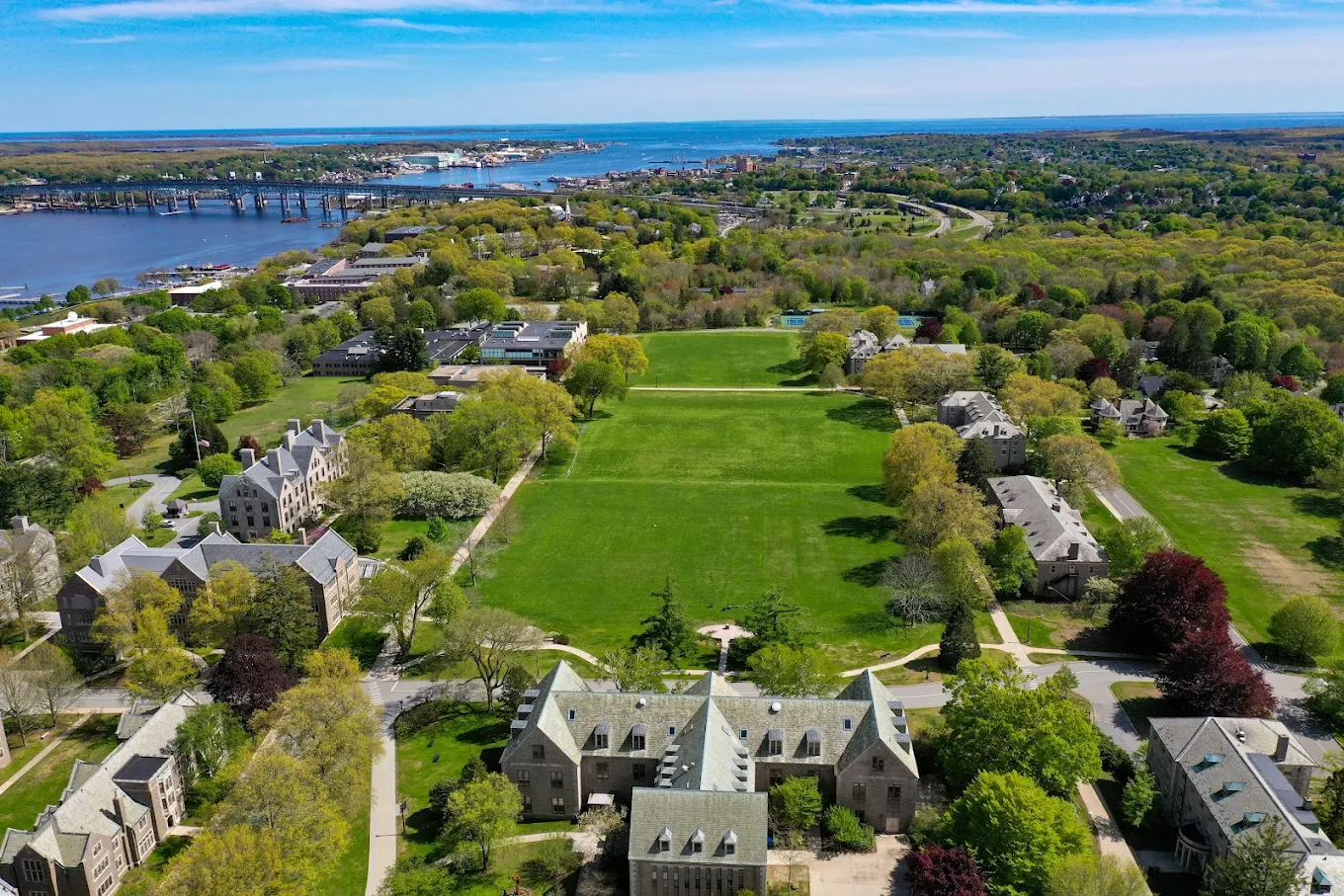
Connecticut College structures its curriculum around Connections, an integrative pathway model that requires each student to develop a thematic, interdisciplinary plan linking courses, a funded internship, study abroad, or community engagement, and a senior integrative project. This model means students begin building a coherent intellectual framework early, with faculty advising embedded in the pathway design. The college’s location between New York and Boston along the Northeast Corridor and its proximity to the Thames River and Long Island Sound inform several field-based programs in marine science and environmental studies. Connecticut College operates on a need-blind admissions policy for domestic applicants and meets 100% of demonstrated financial need.
3.2 Hamilton College | Enrollment: ~2,000 | Acceptance rate: 13.5%
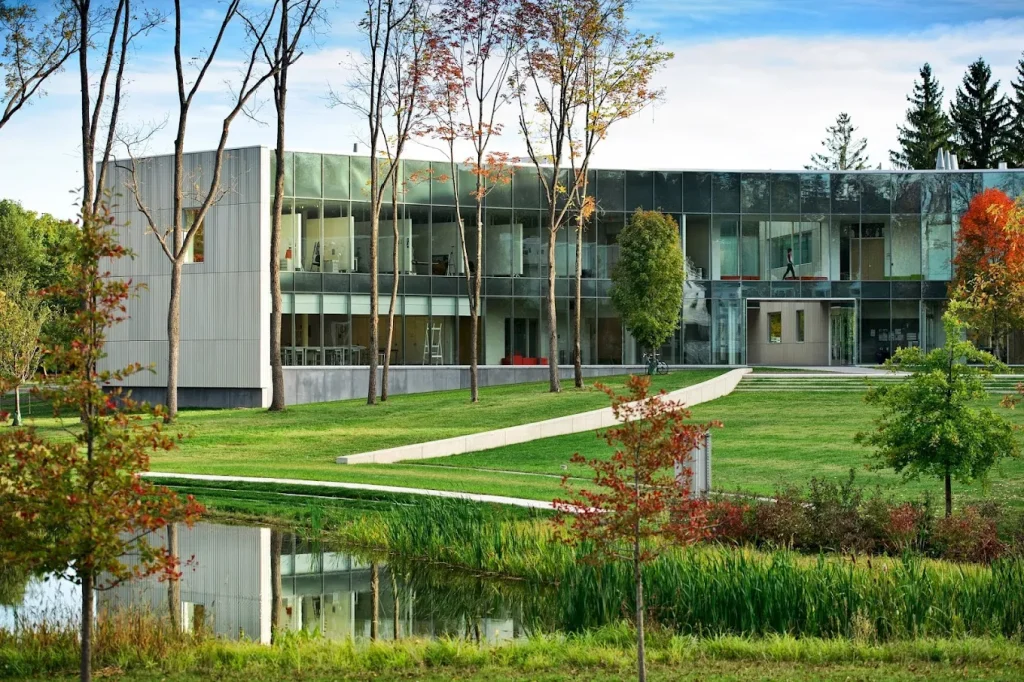
Hamilton has an open curriculum with no required courses, no core, and no distribution requirements, making it one of a small number of selective institutions to place academic design entirely in the student’s hands from enrollment forward. The college’s emphasis on writing and oral communication is institutional rather than departmental: all students take at least three writing-intensive courses. Hamilton meets 100% of demonstrated financial need for all enrolled domestic students under a need-blind admissions policy. The college funds more than 325 research and internship positions annually, and 180 summer research stipends are awarded each year.
3.3 Middlebury College | Enrollment: ~2,600 | Acceptance rate: 13.9%
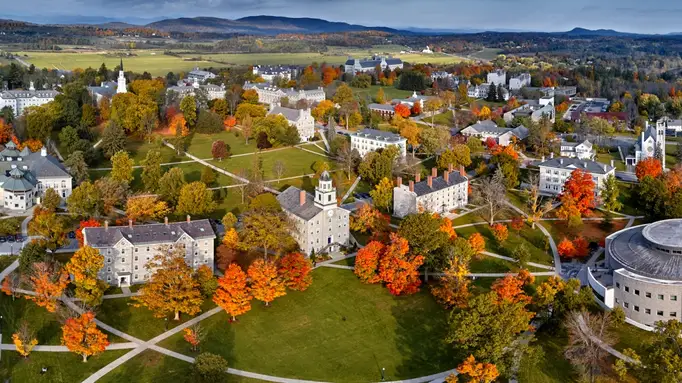
Middlebury operates on a distinctive calendar that includes a February admission cohort (known as “Febs”), creating a staggered enrollment pattern where roughly 100 to 115 students enter mid-year and graduate the following February. Distribution requirements include demonstrated proficiency in a language other than English, an expectation grounded in an institutional infrastructure that extends to the Middlebury Language Schools, which run intensive summer immersion programs in 12 languages open to undergraduates. Middlebury meets 100% of demonstrated financial need for all admitted students.
3.4 Trinity College | Enrollment: ~2,200 | Acceptance rate: 29%
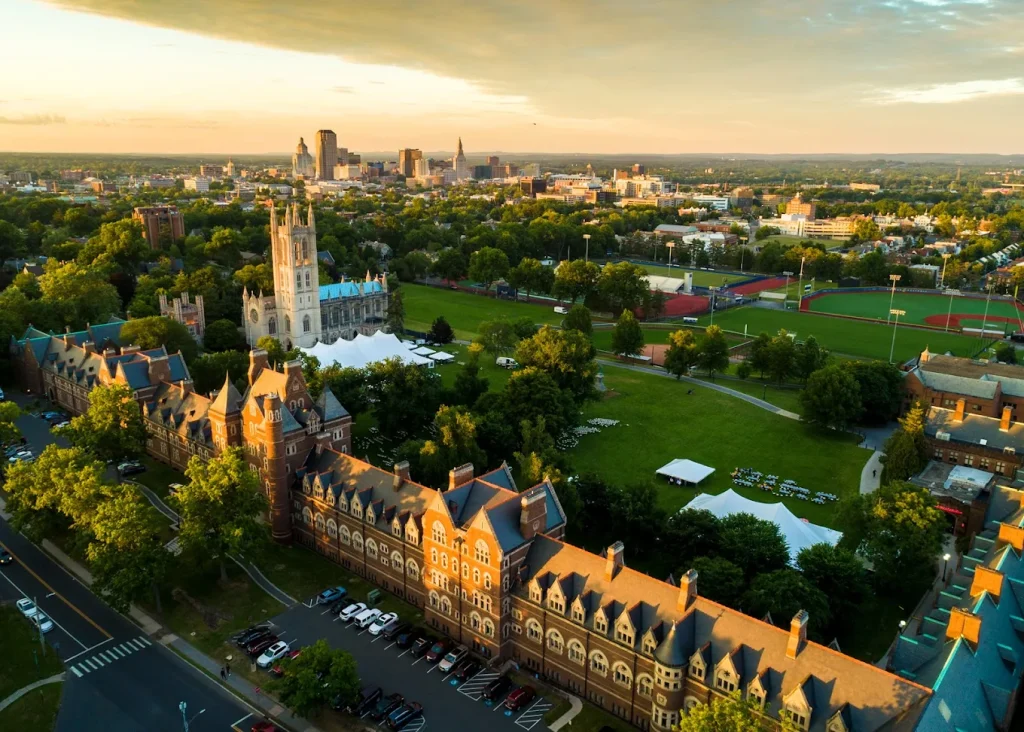
Trinity offers 41 majors and 28 interdisciplinary minors, including an accredited engineering program, a distinction shared by very few liberal arts colleges nationally. The college’s urban campus sits in the Connecticut state capital, and this location is structurally integrated into the academic program through partnerships with Hartford-based institutions in government, finance, insurance, and health care. Trinity operates a long-established study-abroad campus in Rome (Trinity College Rome Campus, founded 1970), and roughly half of undergraduates study abroad at some point. The student-to-faculty ratio is 9:1.
3.5 Tufts University | Enrollment: ~7,000 total | Acceptance rate: 10.5%

Tufts is the only NESCAC member that operates as a full research university rather than a liberal arts college, with undergraduate programs in the School of Arts and Sciences, the School of Engineering, and the School of the Museum of Fine Arts. Undergraduates apply to one of these three schools, each with its own curricular structure and degree requirements. Tufts maintains graduate and professional schools in medicine, veterinary medicine, dental medicine, nutrition science, law, and diplomacy (the Fletcher School), creating proximity to graduate-level research and clinical training that is structurally unavailable at smaller NESCAC institutions. Beginning with fall 2026 admission, Tufts will be tuition-free for U.S. students from families earning less than $150,000 per year.
Little Ivies Admissions: What to Consider
1. Selectivity Varies Within the Category
As noted above, the labelling ‘Little Ivies’ takes its name from comparisons to Ivy League admissions selectivity. However, what the recent college admission trends and current data show is considerably more varied. Acceptance rates across the Little Ivies range from 6.8% at Bowdoin to 37% at Connecticut College, with Trinity near 29%. A category spanning that range cannot be treated as a uniform admissions tier.
Planning assumptions that treat schools as a single category, whether the label is Little Ivies, just Ivies, or non-Ivies, will not reflect how differently these institutions actually operate. Acceptance rates, class sizes, financial aid structures, and curriculum models vary considerably from one school to the next, and those differences have direct consequences for how a candidate approaches each application.
2. A Well-Constructed List Extends Beyond This Group
A category that varies this significantly in selectivity, curriculum structure, and financial aid cannot serve as the foundation for a college list. The Little Ivies represent one portion of a considerably broader landscape of strong undergraduate programs, and hundreds of institutions outside this label offer the same academic rigor, faculty access, and curricular depth that draw families to these schools in the first place.
College admission consultants at McMillan Education consistently advise families to build college lists around a student’s academic record, curricular priorities, and long-term goals. No label, however widely recognized, substitutes for that analysis.
3. Early Decision at Little Ivy Colleges
At highly selective institutions with small undergraduate enrollments, as several of the Little Ivies are, yield management is a central admissions consideration. Early Decision applicants signal a binding commitment, and admissions offices at these schools factor that signal into class-building in ways that carry real consequences for acceptance rates. ED acceptance rates at the more selective Little Ivies run meaningfully higher than their overall rates, because filling a class of under 2,000 students with enrollment certainty is a different institutional calculus than managing a large university’s admissions cycle. Most Little Ivy colleges offer both Early Decision I in November and Early Decision II in January, giving families two binding application windows within the same cycle.
The structural advantage ED provides at these institutions comes with a corresponding obligation. It is a binding financial commitment made before a financial aid award has been issued, which means families need to have completed a thorough financial analysis before submitting an ED application to any selective institution. McMillan Education’s article on Early Decision and Early Action covers the full mechanics and planning considerations.
Planning Beyond the Label
The prestige of a label tells a family relatively little about whether a given institution is the right academic context for a given student, and even less about long-term career outcomes. The research on this is consistent: what students study, how they engage with their academic environment, and what they do with their degree matter considerably more than the name of the institution that granted it. A college list built around brand recognition rather than academic fit, curricular depth, and realistic admissions prospects is a weak planning instrument, regardless of how recognizable the schools on it are.
McMillan Education’s college planning consultants bring an average of 20 years of experience working with families across the full range of selective and less selective institutions. Families at any stage of the college planning process are welcome to schedule a free consultation.
Those who prefer a self-directed approach can explore the W.I.S.E. Admissions Playbook™, McMillan’s online college planning course delivering the same institutional methodology at a fraction of the cost of private consulting.
Frequently Asked Questions
1. What is the difference between the Little Ivies and the Ivy League?
The Ivy League is a formal athletic conference comprising eight universities: Harvard, Yale, Princeton, Columbia, Cornell, Dartmouth, Brown, and Penn. The Little Ivies is an informal label with no official membership or governing body. The two categories share a historical association around academic selectivity, but they are structurally different designations. Most Little Ivies are small liberal arts colleges; the Ivy League institutions are research universities with graduate and professional schools.
2. Are the Little Ivies hard to get into?
Selectivity varies considerably across the group. Acceptance rates range from 6.8% at Bowdoin to 37% at Connecticut College. The more selective Little Ivies reject the majority of highly qualified applicants. Each institution has its own admissions profile and warrants individual research rather than categorical assumptions.
3. What is the difference between Little Ivies and Public Ivies?
The Little Ivies are small, private liberal arts colleges in the Northeast. Public Ivies is a separate informal label applied to selective public research universities, such as the University of Michigan, University of Virginia, and University of California, Berkeley, that are considered to offer academic quality comparable to Ivy League institutions at public university tuition rates. The two categories are distinct in institutional type, size, funding model, and academic structure.
4. Do Little Ivies offer financial aid?
Several Little Ivies have among the most generous financial aid programs in American higher education. Amherst, Williams, Bowdoin, Hamilton, Middlebury, and Connecticut College all meet 100% of demonstrated financial need, and several have eliminated loans from their aid packages entirely. Bowdoin’s average need-based aid award for the Class of 2029 was $72,000. Financial aid structures vary by institution, and families should research each school’s policies individually.
5. What GPA do you need for Little Ivies?
There is no published GPA threshold for admission to any Little Ivy. Admissions at these institutions is holistic, and academic review extends beyond GPA to curricular rigor, grade trends, standardized test scores where submitted, extracurricular depth, and the overall strength of the application. At the more selective end of the group, admitted students typically present records that demonstrate sustained academic excellence across a demanding course load.